Fasteners & Aftermarket Hardware
Bolt grades, thread preparation, lubrication effects, clamp load fundamentals, and aftermarket hardware guidance.
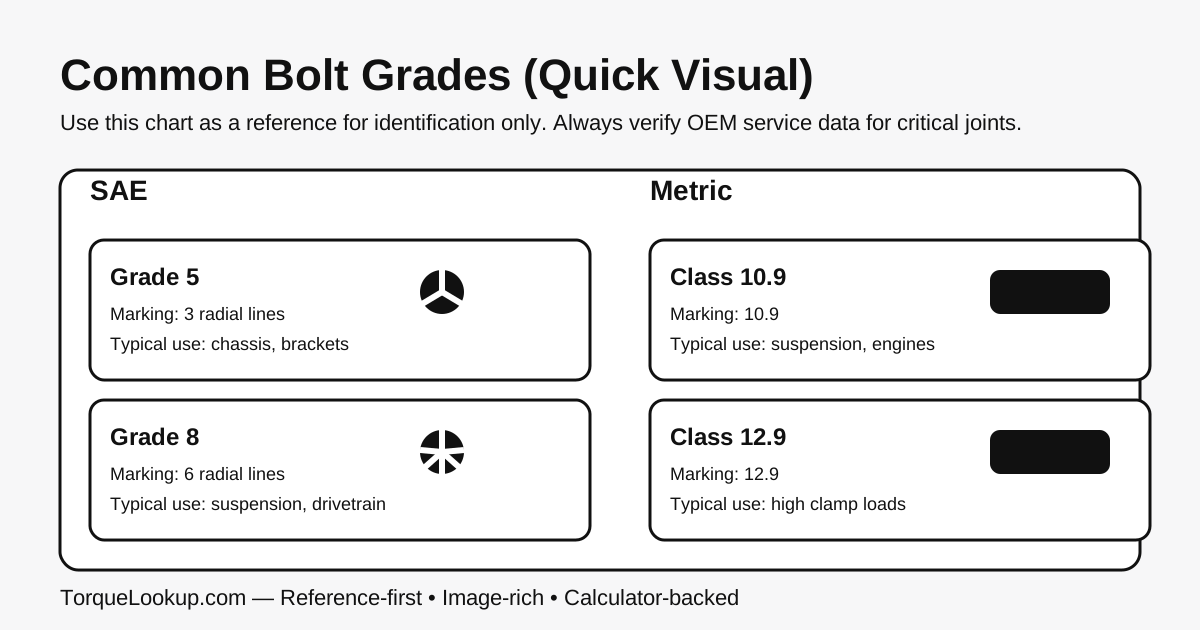
What you will find in this category
- Bolt grades (SAE and metric), head markings, and where they are commonly used.
- Thread preparation: cleaning, chasing vs cutting, and why damaged threads ruin clamp consistency.
- Lubrication effects: dry vs oiled vs anti-seize vs threadlocker, and how friction changes results.
- Aftermarket hardware basics (studs, performance fasteners) and when replacement is required.
- Foundational content designed to support every other category on TorqueLookup.com.
How to use this page for fast, repeatable work
This category page is intentionally deep. It is built to rank for broad queries and to provide enough context that you can safely apply torque practices across a wide range of components. It is also the parent hub for future spec pages (by make/model/component) that you can add later without changing the structure of the site.
Troubleshooting torque problems in the real world
If you are seeing repeat failures—loose hardware, broken bolts, gasket leaks, vibration, or fretting—the root cause is often not “wrong torque,” but inconsistent friction, poor seating surfaces, damaged threads, or hardware that is outside specification. A torque wrench can only control the input. Clamp load is the output, and output depends on condition.
Best-practice foundations
Fasteners and aftermarket hardware are only as reliable as the assumptions behind the spec. Many torque values are published for OEM hardware with known grade/class, coating, washer geometry, and thread condition. When you substitute aftermarket bolts, studs, nuts, or washers, the correct target is still clamp load—and clamp load depends heavily on friction.
Identify the hardware before you torque
- Grade/class: SAE grade (e.g., 5/8) or metric property class (e.g., 8.8/10.9/12.9).
- Thread pitch: coarse vs fine changes the relationship between torque and clamp load.
- Washer + seating face: flange bolts, serrations, and washer type change friction and embedment.
- New vs reused: torque‑to‑yield fasteners are generally single‑use unless the OEM allows reuse.
Condition matters
Published specs typically assume a stated condition (dry, oiled, pre‑applied patch, etc.). Anti‑seize can significantly reduce friction and increase clamp load at the same torque; heavy threadlocker can increase friction depending on product and cure state. Follow the procedure for that joint and apply consistently.
Practical tightening discipline
- Seat the joint: bring the joint fully seated before final torque.
- Use stages: 30–50% pass, then final pass (and angle where specified).
- Use the correct tool range: stay in the middle of the wrench range for accuracy; use in‑lb tools for small fasteners.
- Inspect threads: chase damaged threads; replace stretched or corroded fasteners; ensure washers are flat and surfaces are clean.
When in doubt, default to the OEM hardware and procedure. If you must substitute hardware, match grade/class and geometry, and validate the joint against the fastener manufacturer’s guidance.
Quick reference tables
These are general reference patterns and reminders. Use exact OEM figures for final torque values.
| Condition | Effect on clamp load (general) | Practical implication |
|---|---|---|
| Dry, clean threads | Baseline | Most specs assume this unless stated otherwise. |
| Light oil on threads | Higher clamp load at same torque | Use when OEM specifies oil; be consistent. |
| Anti-seize | Often much higher clamp load at same torque | Great for corrosion prevention but can over-stretch bolts if not accounted for. |
| Threadlocker | Variable (depends on type) | Follow OEM product/strength and cure guidance. |
| Dirty/corroded threads | Lower clamp load at same torque | Clean or replace; torque cannot overcome friction loss safely. |
Does anti-seize change torque values?
Yes. Anti-seize generally reduces friction and can increase clamp load at a given torque. Follow the specification for that joint’s required condition.
Should I chase threads with a tap?
Use caution. A cutting tap can remove material and change fit. A thread chaser is often safer for cleaning. If threads are damaged, replacement may be the correct fix.
Why are some fasteners single-use?
Torque-to-yield and certain locking fasteners may stretch or deform to achieve clamp load or locking. Reuse can produce unpredictable clamp load or loosening.
Next steps
For immediate utility, use the converters and charts in Torque Charts & Calculators. For deeper fundamentals about lubrication, bolt grades, and clamp load, use Fasteners & Aftermarket Hardware. To expand this category into specific torque spec pages later, follow the same URL structure and link from here.