Torque Charts & Calculators
Converters, charts, and practical calculators for torque units, fastener basics, and torque-to-yield understanding.
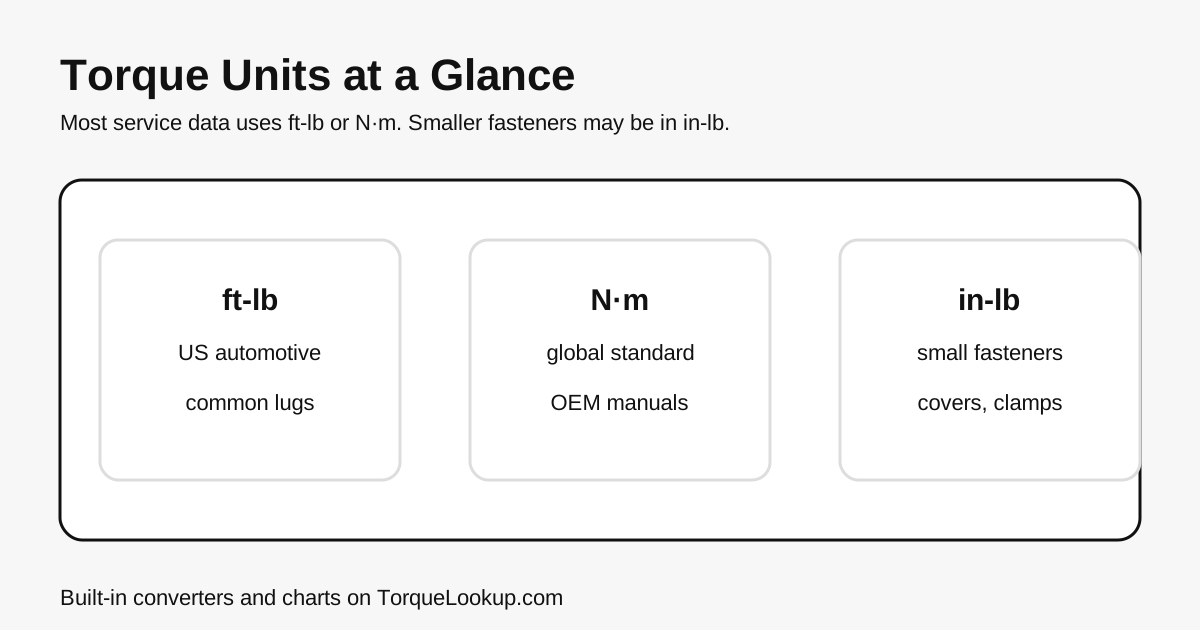
What you will find in this category
- Fast unit conversion (ft-lb, N·m, in-lb) with no clutter.
- Printable quick charts for common ranges and shop reference.
- Torque-to-yield explainer with angle steps and safety reminders.
- Bolt/fastener primer: what affects friction and accuracy.
- A tools folder that makes it easy to add more calculators later.
How to use this page for fast, repeatable work
This category page is intentionally deep. It is built to rank for broad queries and to provide enough context that you can safely apply torque practices across a wide range of components. It is also the parent hub for future spec pages (by make/model/component) that you can add later without changing the structure of the site.
Troubleshooting torque problems in the real world
If you are seeing repeat failures—loose hardware, broken bolts, gasket leaks, vibration, or fretting—the root cause is often not “wrong torque,” but inconsistent friction, poor seating surfaces, damaged threads, or hardware that is outside specification. A torque wrench can only control the input. Clamp load is the output, and output depends on condition.
Best-practice foundations
Torque charts and calculators are useful for planning and cross-checking, but the only torque value you should apply to a safety‑critical joint is the value specified by the OEM or the component manufacturer for your exact application. Charts typically assume a generic fastener grade, thread condition, and lubrication state—changing any of those changes the resulting clamp load at the same torque.
Use calculators the right way
- Start with the correct source: OEM manual, official service bulletin, or manufacturer procedure for the joint and revision you’re servicing.
- Confirm assumptions: fastener grade/class, thread pitch, washer type, and whether the spec is for dry, oiled, or threadlocked threads.
- Convert units safely: ft‑lb ↔ N·m ↔ in‑lb conversions do not change clamp load; friction and seating do.
- Use torque+angle correctly: apply the specified snug torque first, then measure angle with a gauge. Do not “guess” the angle.
- Stage + sequence: bring fasteners up in multiple passes using the correct pattern (star/cross/center‑out) to seat the joint evenly.
Friction control is the hidden variable
Anti‑seize, oil, plating, corrosion, and threadlocker can materially change friction. The safest approach is to follow the condition specified by the procedure. If the procedure specifies clean/dry threads, keep them clean/dry. If it specifies light oil, apply a consistent film and wipe excess.
When charts are appropriate
- Non‑critical assemblies: general brackets, covers, and fixtures where an OEM value is unavailable and the joint is not safety‑critical.
- Fastener selection: estimating torque ranges for a known grade/class and size while you confirm the proper spec.
- Sanity checks: validating that a published value is in a plausible range for the hardware size and grade.
If you are unsure, use the OEM value and procedure. Torque is not a substitute for hardware integrity: replace stretched, damaged, or corroded fasteners and repair threads before final assembly.
Quick reference tables
These are general reference patterns and reminders. Use exact OEM figures for final torque values.
| Conversion | Formula | Reference factor |
|---|---|---|
| N·m → ft-lb | ft-lb = N·m × 0.737562 | 0.737562 |
| ft-lb → N·m | N·m = ft-lb × 1.355818 | 1.355818 |
| in-lb → ft-lb | ft-lb = in-lb ÷ 12 | ÷ 12 |
| ft-lb → in-lb | in-lb = ft-lb × 12 | × 12 |
What is the fastest way to convert N·m to ft-lb?
Use the converter on this page or remember that 1 N·m is approximately 0.7376 ft-lb. For precision, use the calculator to avoid rounding drift.
Should I rely on online torque charts for final torque?
Charts are great for learning and estimation, but safety-critical joints should follow OEM procedure and specification for your exact hardware and condition.
How do I handle torque + angle steps?
Use an angle gauge and follow the exact sequence and stages. Many angle-based fasteners are single-use; confirm replacement requirements.
Next steps
For immediate utility, use the converters and charts in Torque Charts & Calculators. For deeper fundamentals about lubrication, bolt grades, and clamp load, use Fasteners & Aftermarket Hardware. To expand this category into specific torque spec pages later, follow the same URL structure and link from here.