Heavy Equipment & Tractors Torque Specs
Bobcat
Browse models & specs
Caterpillar
Browse models & specs
New Holland
Browse models & specs
John Deere
Browse models & specs
Torque procedures for tractors and heavy equipment—wheel hardware, driveline joints, attachments, and service assemblies.
What you will find in this category
- Equipment torque basics for wheel hardware, attachments, and high-load joints.
- How to handle large fasteners: torque multipliers, long wrenches, and safe reaction points.
- Why re-torque policies vary: settlement, paint crush, and washer embedding.
- Thread preparation and corrosion control in outdoor equipment environments.
- A framework to expand into brand/model pages (Kubota, John Deere, CAT, Bobcat, etc.).
How to use this page for fast, repeatable work
This category page is intentionally deep. It is built to rank for broad queries and to provide enough context that you can safely apply torque practices across a wide range of components. It is also the parent hub for future spec pages (by make/model/component) that you can add later without changing the structure of the site.
Troubleshooting torque problems in the real world
If you are seeing repeat failures—loose hardware, broken bolts, gasket leaks, vibration, or fretting—the root cause is often not “wrong torque,” but inconsistent friction, poor seating surfaces, damaged threads, or hardware that is outside specification. A torque wrench can only control the input. Clamp load is the output, and output depends on condition.
Best-practice foundations
Heavy equipment and tractors use higher clamp loads, larger fasteners, and joints exposed to shock loading. Clean seating, correct hardware grade, and consistent lubrication condition are essential. Many assemblies specify re-torque intervals after initial run-in.
Core workflow
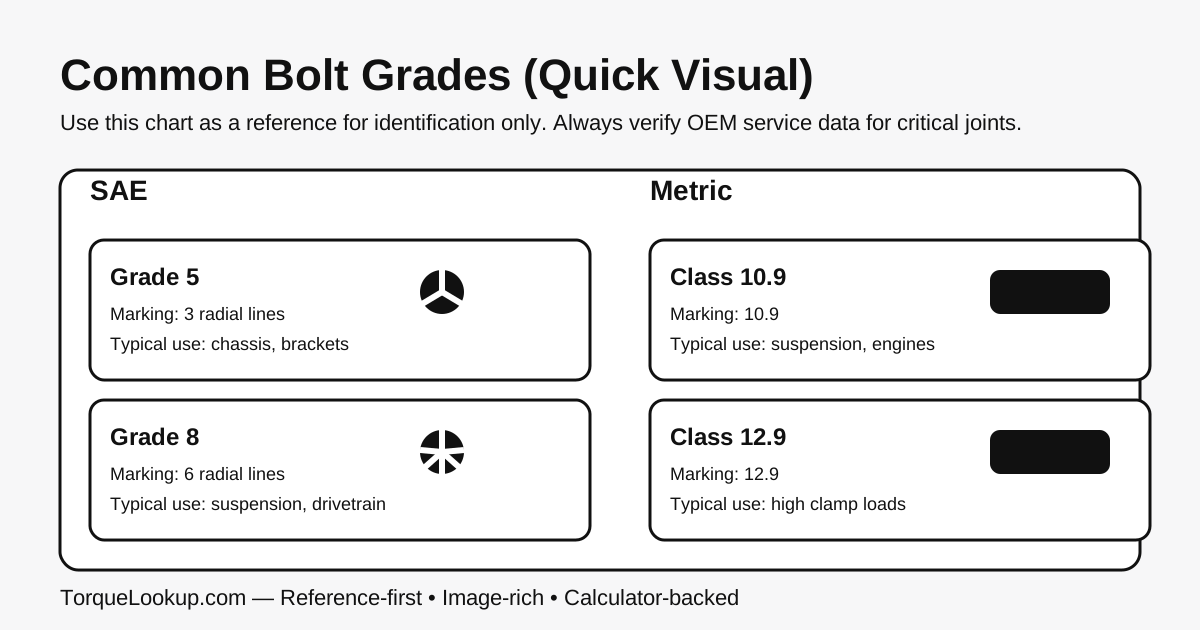
- Confirm hardware class: SAE Grade vs metric class, flange vs standard, and whether torque is for lubricated or dry condition.
- Use appropriate tooling: correct wrench capacity; for high-torque joints use calibrated tools and proper reaction control.
- Stages + patterns: wheels, flanges, and covers frequently require cross-pattern tightening and multiple passes.
- Inspect mating surfaces: rust scale, paint, and debris change friction and seating; correct before torquing.
- Document and verify: mark completion, follow re-torque guidance, and replace deformed or damaged hardware.
Quick reference tables
These are general reference patterns and reminders. Use exact OEM figures for final torque values.
| Work type | Recommended approach | Why it matters |
|---|---|---|
| Wheel hardware | Clean seat faces, stage torque, mark | Settlement and debris crush can change clamp load. |
| Loader/attachment mounts | Stage torque; inspect washers | Dynamic loads can loosen poorly seated joints. |
| Driveline flange bolts | Use specified locking method | Vibration and cyclic load demand correct retention. |
| Hydraulic mounts | Confirm alignment before torque | Side-load during torque can distort brackets. |
| Frame joints | Use correct grade fasteners | Mixing grades changes clamp load and fatigue life. |
Why do tractor wheel bolts come loose?
Common causes include seating surfaces with paint or debris, reused distorted washers, uneven staging, or incorrect torque for the wheel/hub combination. Seating and staged torque are critical.
Do I need a torque multiplier?
For high-torque joints, a multiplier or calibrated long-handle method can improve consistency and reduce operator strain—use proper reaction and safety practices.
Should I recheck torque after hard work?
Follow OEM guidance. Some wheel hardware may require a recheck after initial use; others do not. If allowed, mark and verify uniformly.
Next steps
For immediate utility, use the converters and charts in Torque Charts & Calculators. For deeper fundamentals about lubrication, bolt grades, and clamp load, use Fasteners & Aftermarket Hardware. To expand this category into specific torque spec pages later, follow the same URL structure and link from here.