Industrial & Construction
Industrial and construction torque guidance for anchor bolts, structural joints, flanges, mounts, and shop assemblies.
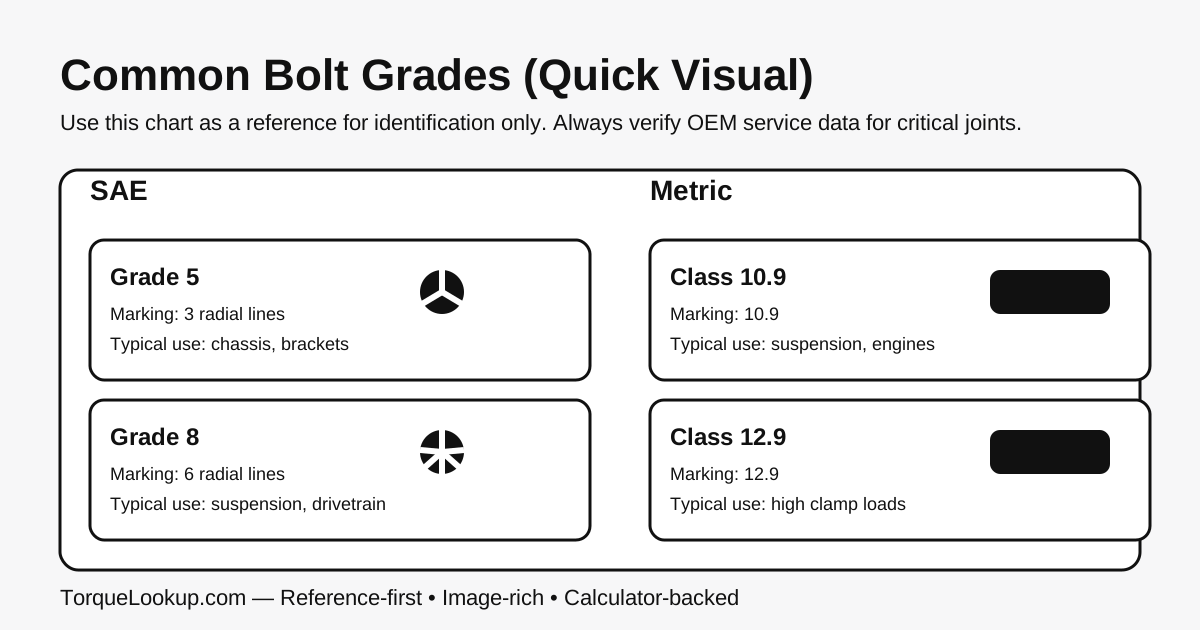
What you will find in this category
- Anchor and structural joint fundamentals: seating, washer selection, and uniform clamp load.
- Flange-style joints: staged cross patterns, gasket compression, and leakage prevention.
- When torque alone isn’t enough: tensioning, lubrication control, and joint design considerations.
- Field realities: corrosion, paint, debris, and access constraints—and how to maintain consistency.
- A roadmap to expand into standards-based reference pages and charts.
How to use this page for fast, repeatable work
This category page is intentionally deep. It is built to rank for broad queries and to provide enough context that you can safely apply torque practices across a wide range of components. It is also the parent hub for future spec pages (by make/model/component) that you can add later without changing the structure of the site.
Troubleshooting torque problems in the real world
If you are seeing repeat failures—loose hardware, broken bolts, gasket leaks, vibration, or fretting—the root cause is often not “wrong torque,” but inconsistent friction, poor seating surfaces, damaged threads, or hardware that is outside specification. A torque wrench can only control the input. Clamp load is the output, and output depends on condition.
Best-practice foundations
Industrial torque practices focus on repeatability, documentation, and correct preload—especially on flanges, anchors, and machine mounts. Torque is only meaningful when the condition (lubrication, surface finish, washer use) matches the specified procedure.
Core workflow
- Procedure-first: confirm the standard/procedure used (OEM, ASME/ANSI method, manufacturer bulletin) and follow it consistently.
- Control friction: define dry/oiled condition, washer type, and thread treatment; keep it consistent across all fasteners in the joint.
- Patterns + stages: use star/cross patterns and multiple passes for flanges and structural joints.
- Measurement: use calibrated tooling; consider angle methods or tensioning where specified.
- Recordkeeping: document completion and inspection, especially for safety-critical assemblies.
Quick reference tables
These are general reference patterns and reminders. Use exact OEM figures for final torque values.
| Joint type | Preferred pattern | Key reminder |
|---|---|---|
| Flange/gasket | Cross pattern in stages | Gaskets compress; stages help avoid leaks and distortion. |
| Baseplate/anchor | Opposed bolts in stages | Seating and washer condition drive clamp consistency. |
| Machine mounts | Alternate bolts | Align components before torque to avoid side-load. |
| Structural connections | Per method/spec | Use the correct bolt class and installation method. |
| Pipe supports | Alternating | Avoid over-torquing clamps that can crush pipe or hardware. |
Are industrial flange bolts torqued like wheels?
The concept is similar (cross pattern and stages), but gasket compression and joint stiffness make staged tightening even more important. Follow the applicable procedure for your flange and gasket.
Do lubricants matter for structural bolts?
Yes. Lubrication changes friction and therefore clamp load. Use the specified condition and verify method for the joint type.
What if a bolt feels like it is yielding before torque?
Stop. Inspect threads, confirm grade, check for galling, and verify the correct hardware. Torque is not a fix for damaged fasteners.
Next steps
For immediate utility, use the converters and charts in Torque Charts & Calculators. For deeper fundamentals about lubrication, bolt grades, and clamp load, use Fasteners & Aftermarket Hardware. To expand this category into specific torque spec pages later, follow the same URL structure and link from here.