Small Engines & Outdoor Power
Torque specs guidance for generators, lawn equipment, and outdoor power tools—flywheels, blades, covers, and crank fasteners.
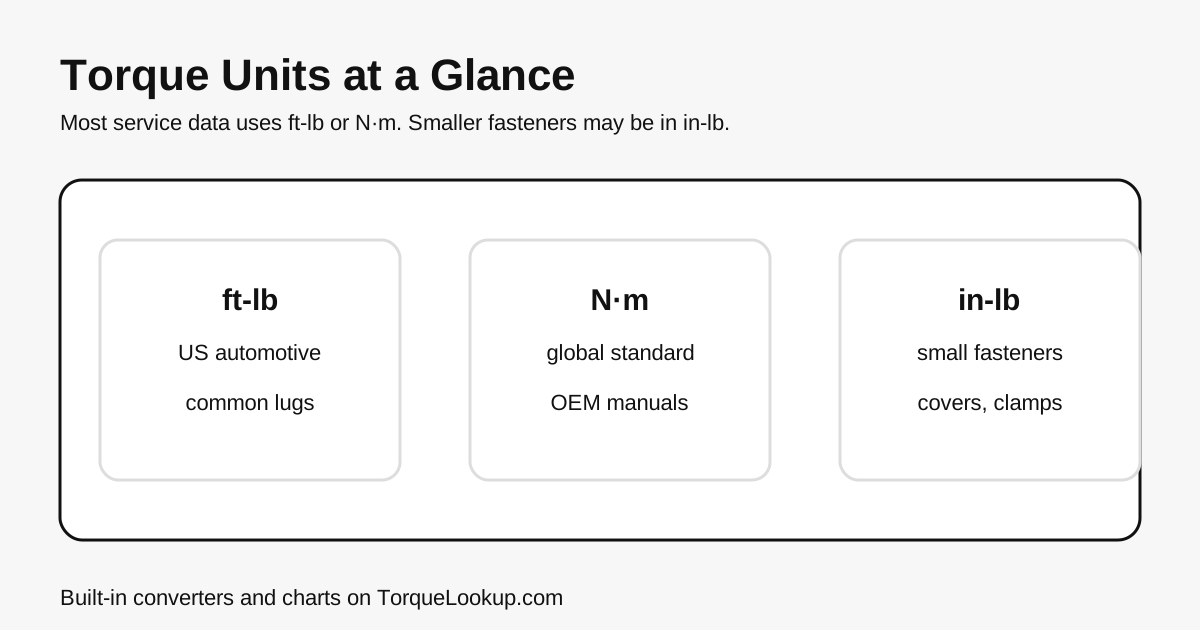
What you will find in this category
- How to avoid the #1 small-engine failure: over-torqued small fasteners.
- Flywheel and blade retention fundamentals: seating, keyways, and proper torque methods.
- Using in-lb torque wrenches correctly for covers, clamps, and carb fasteners.
- Vibration management: why clean threads and correct washers matter on outdoor equipment.
- A scalable structure for brand/model pages (Briggs, Kohler, Honda GX, Predator, etc.).
How to use this page for fast, repeatable work
This category page is intentionally deep. It is built to rank for broad queries and to provide enough context that you can safely apply torque practices across a wide range of components. It is also the parent hub for future spec pages (by make/model/component) that you can add later without changing the structure of the site.
Troubleshooting torque problems in the real world
If you are seeing repeat failures—loose hardware, broken bolts, gasket leaks, vibration, or fretting—the root cause is often not “wrong torque,” but inconsistent friction, poor seating surfaces, damaged threads, or hardware that is outside specification. A torque wrench can only control the input. Clamp load is the output, and output depends on condition.
Best-practice foundations
Small engines and outdoor power equipment typically use small fasteners, soft aluminum threads, and gasketed covers. Over-torque is a common cause of stripped threads, warped covers, and oil leaks. Use staged tightening and the correct tool range.
Core workflow
- Use in‑lb tools: most cover and carburetor fasteners are best handled with an inch‑pound wrench.
- Seat evenly: tighten covers in a crisscross or perimeter pattern to avoid warping and gasket pinch.
- Thread condition: clean threads, avoid cross-threading, and repair damaged threads before final assembly.
- Do not “add friction reducers”: only lubricate threads if the OEM procedure specifies it.
- Verify: run and inspect for leaks; re-check fasteners when specified.
Quick reference tables
These are general reference patterns and reminders. Use exact OEM figures for final torque values.
| Assembly | Common pitfall | Better method |
|---|---|---|
| Engine covers | Over-torque causing warping/leaks | Use in-lb values, staged pattern, clean gasket surfaces. |
| Carburetor fasteners | Stripped threads in soft metals | Start by hand, use correct torque, avoid cross-threading. |
| Flywheel nut | Impact over-tightening | Hold flywheel per OEM and torque with proper range. |
| Blade bolt | Dirty seating surfaces | Clean mating faces and torque to spec; inspect washers. |
| Generator mounts | Loose hardware from vibration | Use correct locking method and recheck per OEM if allowed. |
Why do small bolts snap so often on engines?
They’re small and easy to over-torque, especially when using a large wrench at the bottom of its range. Use in-lb tools and stop if you feel binding or thread damage.
Should I use threadlocker on mower blades?
Follow OEM guidance. Many blade bolts rely on correct torque and seating. Threadlocker can change friction and torque-to-clamp relationship.
Is 'impact tight' acceptable for flywheel or blade bolts?
No for critical joints. Impacts can over-stretch fasteners and mask thread damage. Use a torque wrench and proper holding method.
Next steps
For immediate utility, use the converters and charts in Torque Charts & Calculators. For deeper fundamentals about lubrication, bolt grades, and clamp load, use Fasteners & Aftermarket Hardware. To expand this category into specific torque spec pages later, follow the same URL structure and link from here.