Bolt Torque Chart (General Reference)
This chart is for general reference and learning. For critical joints, follow the OEM torque spec and the required condition (dry, oiled, threadlocker, etc.). Changing lubrication changes friction and clamp load.
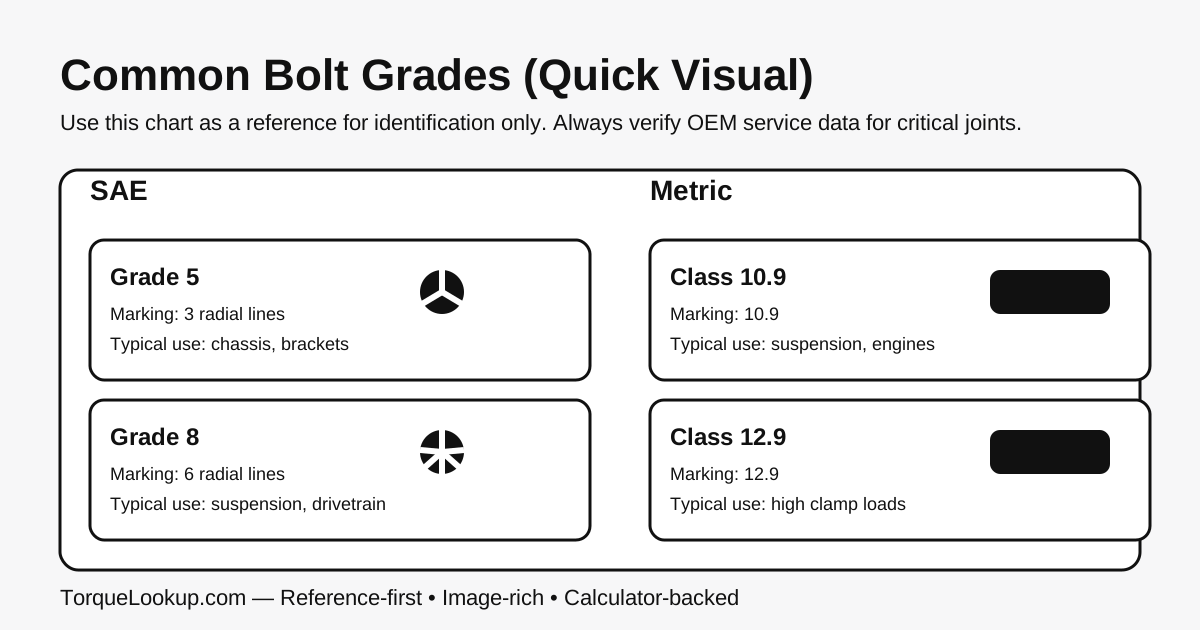
How to use this chart safely:
Use it to sanity-check a value or select an initial stage torque, then confirm the final spec for your exact application.
If your joint uses a gasket, a tapered seat, a flange, or a torque-to-yield bolt, the correct procedure may differ substantially.
Quick reference ranges
| Fastener (reference) | ft-lb (range) | N·m (range) |
|---|---|---|
| M6 (8.8) | 6–10 | 8–14 |
| M8 (8.8) | 15–25 | 20–34 |
| M10 (10.9) | 40–55 | 54–75 |
| M12 (10.9) | 70–95 | 95–129 |
| 1/4" (Grade 5) | 6–9 | 8–12 |
| 3/8" (Grade 5) | 25–35 | 34–47 |
| 1/2" (Grade 8) | 90–120 | 122–163 |
| 5/8" (Grade 8) | 180–240 | 244–325 |
Why charts can mislead
Most “one chart fits all” pages fail because torque depends on more than size. Strength class, thread pitch, seating surface, washer hardness, lubrication, and joint stiffness all change the clamp load you get at a given torque. That is why TorqueLookup.com treats charts as supporting context, not as a replacement for manufacturer service data.
What to do when you do not have the manual yet
- Identify bolt size and grade/class, and confirm thread pitch.
- Clean threads and seating surfaces so friction is predictable.
- Use a staged approach: 30–50% stage, then final once verified.
- Watch for yield signals: sudden rotation without rising torque, thread galling, or stretching.
- Acquire the OEM procedure before final assembly on safety-critical joints.
Next: use the Torque Unit Converter, or read the Torque-to-Yield explainer.