2016 Ford S550 Mustang-Shelby Brake Kit FR3Z-4K138-C RH GT350 HALF SHAFT Torque Spec
Reference torque specification for the FR3Z-4K138-C RH GT350 HALF SHAFT on a 2016 Ford S550 Mustang-Shelby Brake Kit, sourced from a publicly available Ford Performance instruction sheet.
Torque spec (numeric)
| Item | Value |
|---|---|
| Final torque (N·m) | 1 |
| Final torque (ft‑lb) | 29 |
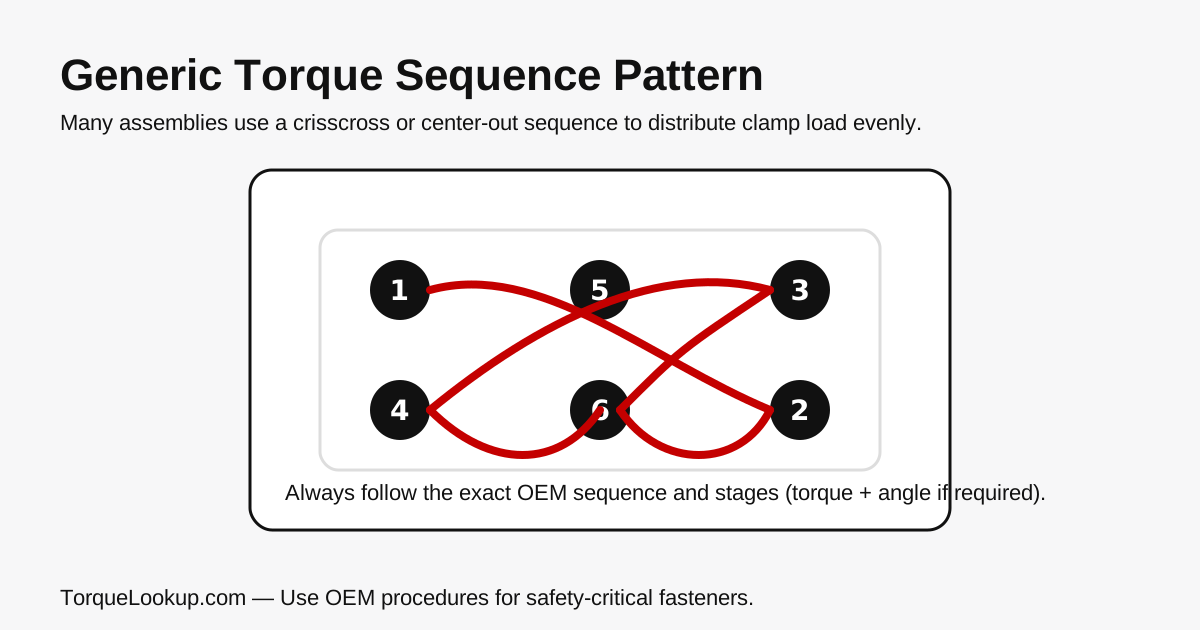
What this page covers
- Application: 2016 Ford S550 Mustang-Shelby Brake Kit
- Component: FR3Z-4K138-C RH GT350 HALF SHAFT
- Focus: seating surfaces, staged torque, sequence (if applicable), and locking method
Torque spec lookup checklist
TorqueLookup.com is intentionally process-first: it helps you confirm the correct OEM value and method without encouraging guessing. Use the checklist below to verify your exact spec.
| Step | What to check | Why it matters |
|---|---|---|
| 1 | Exact year / model / trim / engine | Specs can change between trims, engines, and revisions. |
| 2 | Fastener type (bolt vs stud/nut) + grade/class | Strength and seating geometry affect clamp load. |
| 3 | Condition (dry, oiled, threadlocker, anti-seize) | Friction changes clamp load at the same torque. |
| 4 | Sequence and staging requirements | Uniform loading prevents distortion and loosening. |
| 5 | Locking method (stake/cotter/tab/new nut) | Many joints rely on specified retention. |
Best-practice installation notes
Confirm fastener condition (clean/dry threads unless specified) and replace any single-use or locking hardware per OEM procedure.
If your vehicle/component differs (trim, axle, wheel type, aftermarket parts), verify against the exact Ford service information for your VIN.
Common mistakes
- Using the wrong wrench range (small fastener with a large wrench at the bottom of its range)
- Torquing before the joint is fully seated (paint/debris on mating faces)
- Changing lubrication without updating the procedure (anti-seize can increase clamp load at the same torque)
- Skipping the specified sequence/stages
- Reusing single-use (TTY) or locking hardware when replacement is required
Helpful tools
- Torque unit converter (ft-lb ↔ N·m ↔ in-lb)
- Bolt torque chart (general reference)
- Torque-to-yield (TTY) explainer
- Fasteners & lubrication fundamentals
FAQ
Where do I find the OEM torque spec for this exact application?
Use the factory service manual or official manufacturer procedure for your exact year/model/trim and the specific component revision.
Should I use anti-seize or threadlocker?
Only if the OEM procedure specifies it. Lubrication and threadlocker change friction and can change clamp load at the same torque.
Do I need a sequence or staged torque?
Many assemblies do. Use the OEM sequence and stage approach to seat the joint evenly and reduce distortion.